Commercial-grade Phoenix Oyster grain spawn — PP-LOG from Maine Cap N' Stem, a heat-tolerant Pleurotus pulmonarius strain trusted by farms across North America. Reliable colonizer. Excellent shelf life. Fruits best at 60–85°F, making it ideal for warm-weather and summer production.
What You're Getting
This is PP-LOG, a commercial Pleurotus pulmonarius strain sourced from Maine Cap N' Stem — one of the most widely trusted spawn suppliers in North America. Also known as Italian Oyster or Phoenix Mushroom, this strain has been a go-to Phoenix oyster for professional farms for over a decade.
We grow PP-LOG ourselves at Cotaco Creek Mushroom Farm. You're buying the same genetics we put in our own blocks.
The spawn ships as fully colonized grain, ready to transfer directly to your bulk substrate. Each bag is produced using proper aseptic technique and undergoes visual inspection before it ships.
Why PP-LOG?
Not all Phoenix Oyster strains perform the same under real-world farm conditions. PP-LOG earns its place in commercial grows because of a few key traits:
Heat-tolerant warm-weather fruiter — fruits reliably at 60–85°F, making it the ideal summer strain when Blue Oysters underperform
Outstanding post-harvest shelf life — longer shelf life than most oyster strains, making it an excellent choice for wholesale and restaurant accounts
Contamination resistance — known for strong resistance to bacterial blotch and other common contaminants
Reliable, predictable performer — consistent pinning behavior and fruiting results across multiple flushes
Wide substrate compatibility — performs on wheat straw, hardwood sawdust, Master's Mix (HWFP + soy hulls), coffee grounds, and supplemented sawdust blocks
Distinctive appearance — pale tan to cream caps (3–8 inches), wavy edges, more developed stem than Blue Oyster, often forming large overlapping rosette clusters
Best Uses
Inoculating sterilized hardwood or Master's Mix fruiting blocks
Pasteurized straw bags, buckets, or columns
Summer and warm-season production when Blue Oyster is out of range
Outdoor straw or wood chip beds (best late spring through early fall)
Grain-to-grain (G2G) expansion for larger production runs
Growing Parameters
ParameterRange:
Incubation Temp: 66–75°F (keep block core ≤66°F to prevent blotch)
Fruiting Temp: 60–85°F (warm-season strain)
Humidity (pinning): 90–95% RH
Humidity (fruiting): 85–90% RH
Time to First Pins: 14–25 days from inoculation
Unlike Blue Oyster, PP-LOG does not require a cold trigger to pin. It will fruit readily in standard indoor conditions through summer months.
Storage & Handling
Use within 2–4 weeks of receipt for best results
Refrigerate at 35–45°F if not using immediately — viable up to 3 months when properly stored
Do not freeze
Allow spawn to reach room temperature before use
Break up grain mass thoroughly before inoculating substrate
Always use clean tools and aseptic technique when transferring
About Cotaco Creek Mushroom Farm
We're a small commercial mushroom farm in Somerville, Alabama. We grow, eat, and sell what we produce — and we only offer spawn from strains we trust in our own facility. Every bag leaves here because we'd put it in our own blocks.
Have questions about inoculation rates, substrate formulas, or fruiting conditions? Reach out — we're happy to help.
FAQ
Can I use this to make more grain spawn?
Yes. Grain-to-grain (G2G) transfers work well with this strain if you have a flow hood or still air box and proper aseptic technique.
What's the inoculation rate?
For sterilized hardwood blocks, use 10–20% spawn by weight. For pasteurized straw, 15–25% works well. Higher rates speed colonization and reduce contamination risk.
Do I need a pressure cooker or autoclave?
For sterilized hardwood or Master's Mix substrates, yes — pressure cook at 15 PSI for 2.5 hours minimum, or use an autoclave. For straw, lime pasteurization or a hot water bath (160–185°F for 1–2 hrs) is sufficient.
How is Phoenix Oyster different from Blue Oyster?
Pleurotus pulmonarius fruits at warmer temperatures (60–85°F vs. 50–65°F for Blue Oyster) and produces paler, more elongated caps with a more pronounced stem. It's the go-to warm-season oyster for farms that want year-round production.
Will this work outdoors in Alabama?
Yes — PP-LOG is well-suited to Alabama's warm springs and long fall season. Target outdoor temps of 60–85°F. Straw beds and wood chip piles are the most common outdoor substrates. It outperforms Blue Oyster in Alabama's summer heat.
What's the difference between Phoenix Oyster and Italian Oyster?
They're the same species — Pleurotus pulmonarius goes by several common names including Phoenix Oyster, Italian Oyster, Indian Oyster, and Lung Oyster. PP-LOG is the commercial strain name.
Commercial-grade Phoenix Oyster grain spawn — PP-LOG from Maine Cap N' Stem, a heat-tolerant Pleurotus pulmonarius strain trusted by farms across North America. Reliable colonizer. Excellent shelf life. Fruits best at 60–85°F, making it ideal for warm-weather and summer production.
What You're Getting
This is PP-LOG, a commercial Pleurotus pulmonarius strain sourced from Maine Cap N' Stem — one of the most widely trusted spawn suppliers in North America. Also known as Italian Oyster or Phoenix Mushroom, this strain has been a go-to Phoenix oyster for professional farms for over a decade.
We grow PP-LOG ourselves at Cotaco Creek Mushroom Farm. You're buying the same genetics we put in our own blocks.
The spawn ships as fully colonized grain, ready to transfer directly to your bulk substrate. Each bag is produced using proper aseptic technique and undergoes visual inspection before it ships.
Why PP-LOG?
Not all Phoenix Oyster strains perform the same under real-world farm conditions. PP-LOG earns its place in commercial grows because of a few key traits:
Heat-tolerant warm-weather fruiter — fruits reliably at 60–85°F, making it the ideal summer strain when Blue Oysters underperform
Outstanding post-harvest shelf life — longer shelf life than most oyster strains, making it an excellent choice for wholesale and restaurant accounts
Contamination resistance — known for strong resistance to bacterial blotch and other common contaminants
Reliable, predictable performer — consistent pinning behavior and fruiting results across multiple flushes
Wide substrate compatibility — performs on wheat straw, hardwood sawdust, Master's Mix (HWFP + soy hulls), coffee grounds, and supplemented sawdust blocks
Distinctive appearance — pale tan to cream caps (3–8 inches), wavy edges, more developed stem than Blue Oyster, often forming large overlapping rosette clusters
Best Uses
Inoculating sterilized hardwood or Master's Mix fruiting blocks
Pasteurized straw bags, buckets, or columns
Summer and warm-season production when Blue Oyster is out of range
Outdoor straw or wood chip beds (best late spring through early fall)
Grain-to-grain (G2G) expansion for larger production runs
Growing Parameters
ParameterRange:
Incubation Temp: 66–75°F (keep block core ≤66°F to prevent blotch)
Fruiting Temp: 60–85°F (warm-season strain)
Humidity (pinning): 90–95% RH
Humidity (fruiting): 85–90% RH
Time to First Pins: 14–25 days from inoculation
Unlike Blue Oyster, PP-LOG does not require a cold trigger to pin. It will fruit readily in standard indoor conditions through summer months.
Storage & Handling
Use within 2–4 weeks of receipt for best results
Refrigerate at 35–45°F if not using immediately — viable up to 3 months when properly stored
Do not freeze
Allow spawn to reach room temperature before use
Break up grain mass thoroughly before inoculating substrate
Always use clean tools and aseptic technique when transferring
About Cotaco Creek Mushroom Farm
We're a small commercial mushroom farm in Somerville, Alabama. We grow, eat, and sell what we produce — and we only offer spawn from strains we trust in our own facility. Every bag leaves here because we'd put it in our own blocks.
Have questions about inoculation rates, substrate formulas, or fruiting conditions? Reach out — we're happy to help.
FAQ
Can I use this to make more grain spawn?
Yes. Grain-to-grain (G2G) transfers work well with this strain if you have a flow hood or still air box and proper aseptic technique.
What's the inoculation rate?
For sterilized hardwood blocks, use 10–20% spawn by weight. For pasteurized straw, 15–25% works well. Higher rates speed colonization and reduce contamination risk.
Do I need a pressure cooker or autoclave?
For sterilized hardwood or Master's Mix substrates, yes — pressure cook at 15 PSI for 2.5 hours minimum, or use an autoclave. For straw, lime pasteurization or a hot water bath (160–185°F for 1–2 hrs) is sufficient.
How is Phoenix Oyster different from Blue Oyster?
Pleurotus pulmonarius fruits at warmer temperatures (60–85°F vs. 50–65°F for Blue Oyster) and produces paler, more elongated caps with a more pronounced stem. It's the go-to warm-season oyster for farms that want year-round production.
Will this work outdoors in Alabama?
Yes — PP-LOG is well-suited to Alabama's warm springs and long fall season. Target outdoor temps of 60–85°F. Straw beds and wood chip piles are the most common outdoor substrates. It outperforms Blue Oyster in Alabama's summer heat.
What's the difference between Phoenix Oyster and Italian Oyster?
They're the same species — Pleurotus pulmonarius goes by several common names including Phoenix Oyster, Italian Oyster, Indian Oyster, and Lung Oyster. PP-LOG is the commercial strain name.
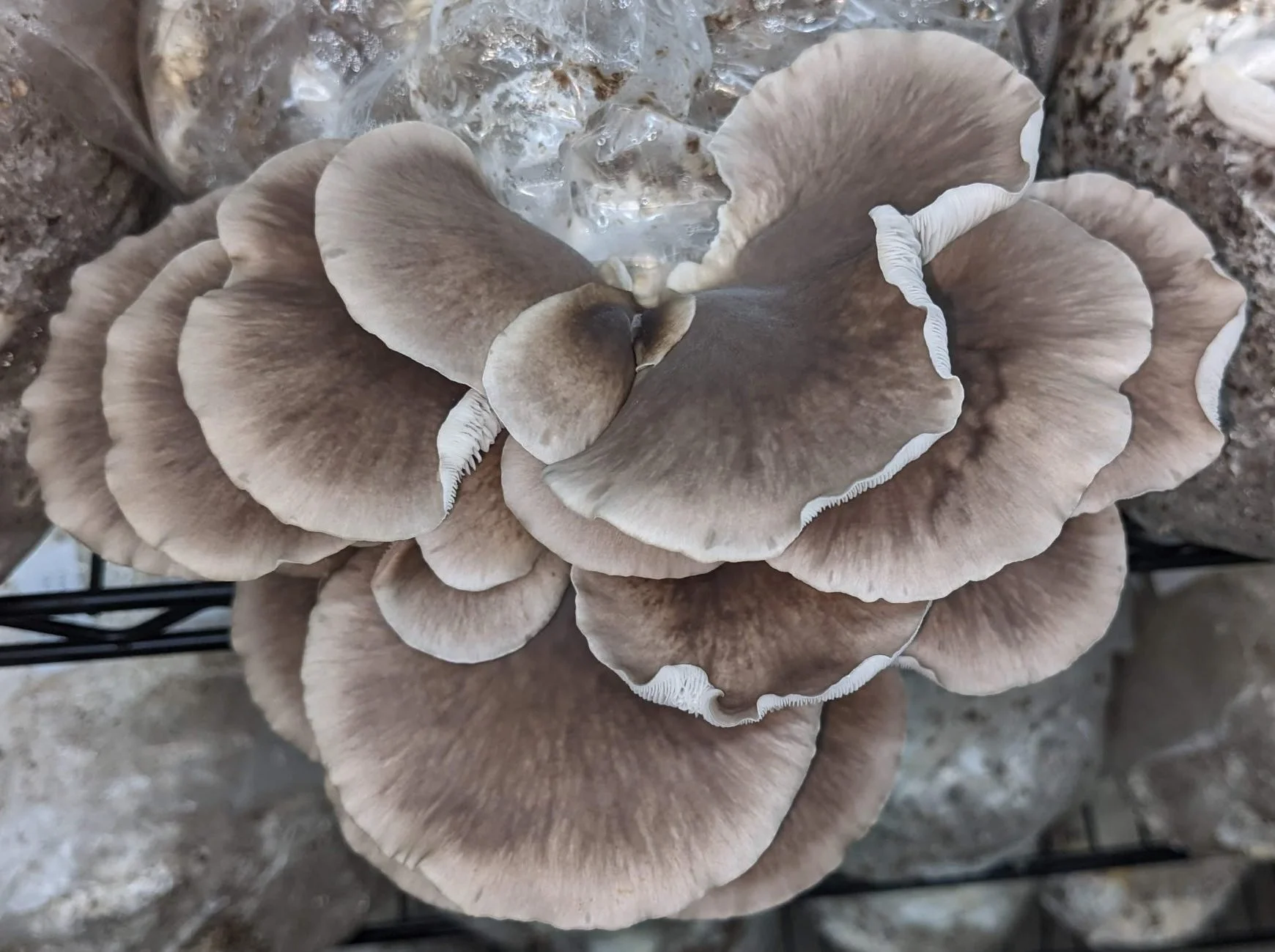 Image 1 of 7
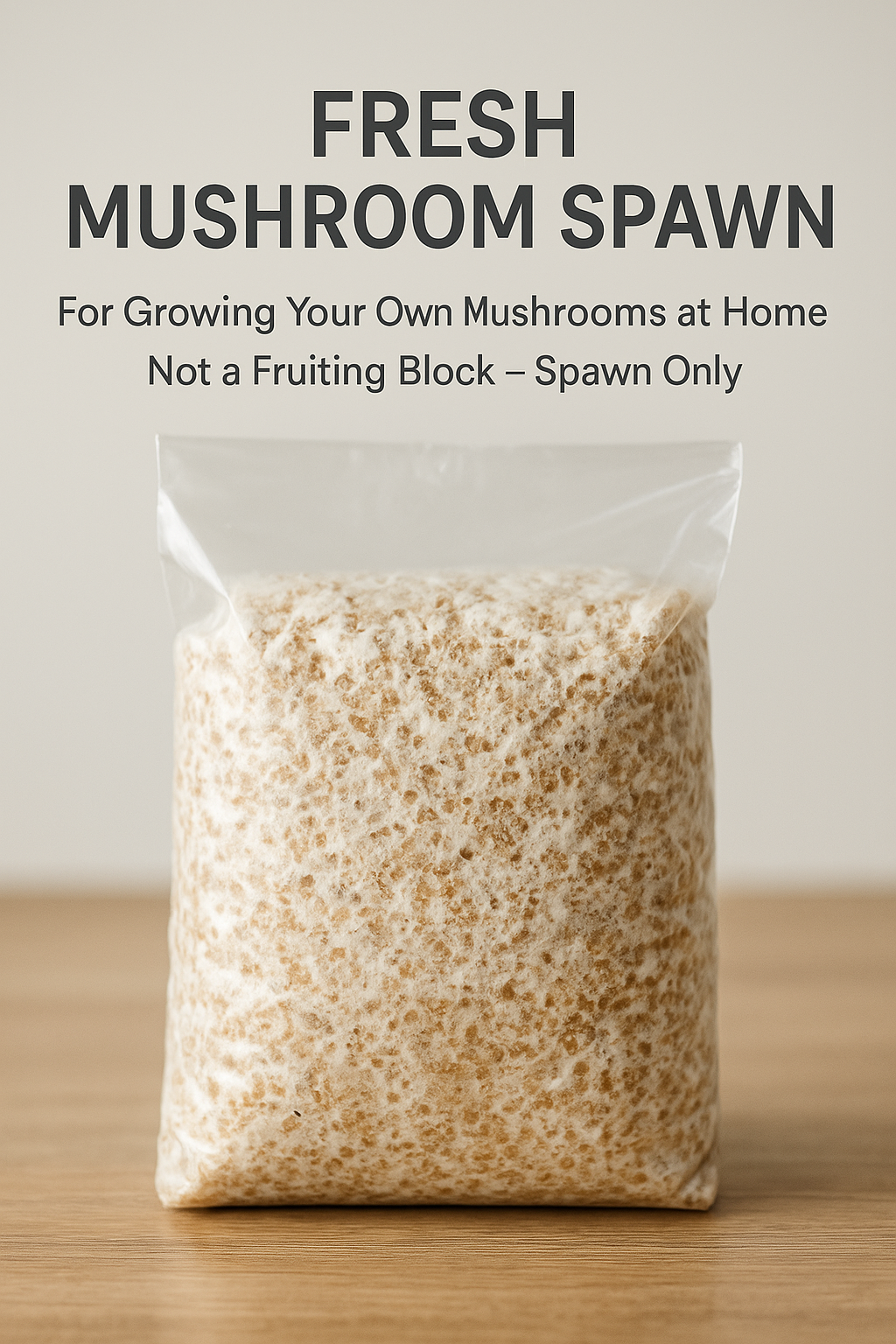 Image 2 of 7
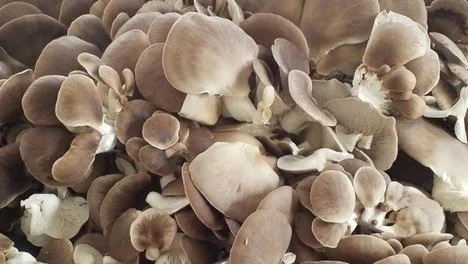 Image 3 of 7
 Image 4 of 7
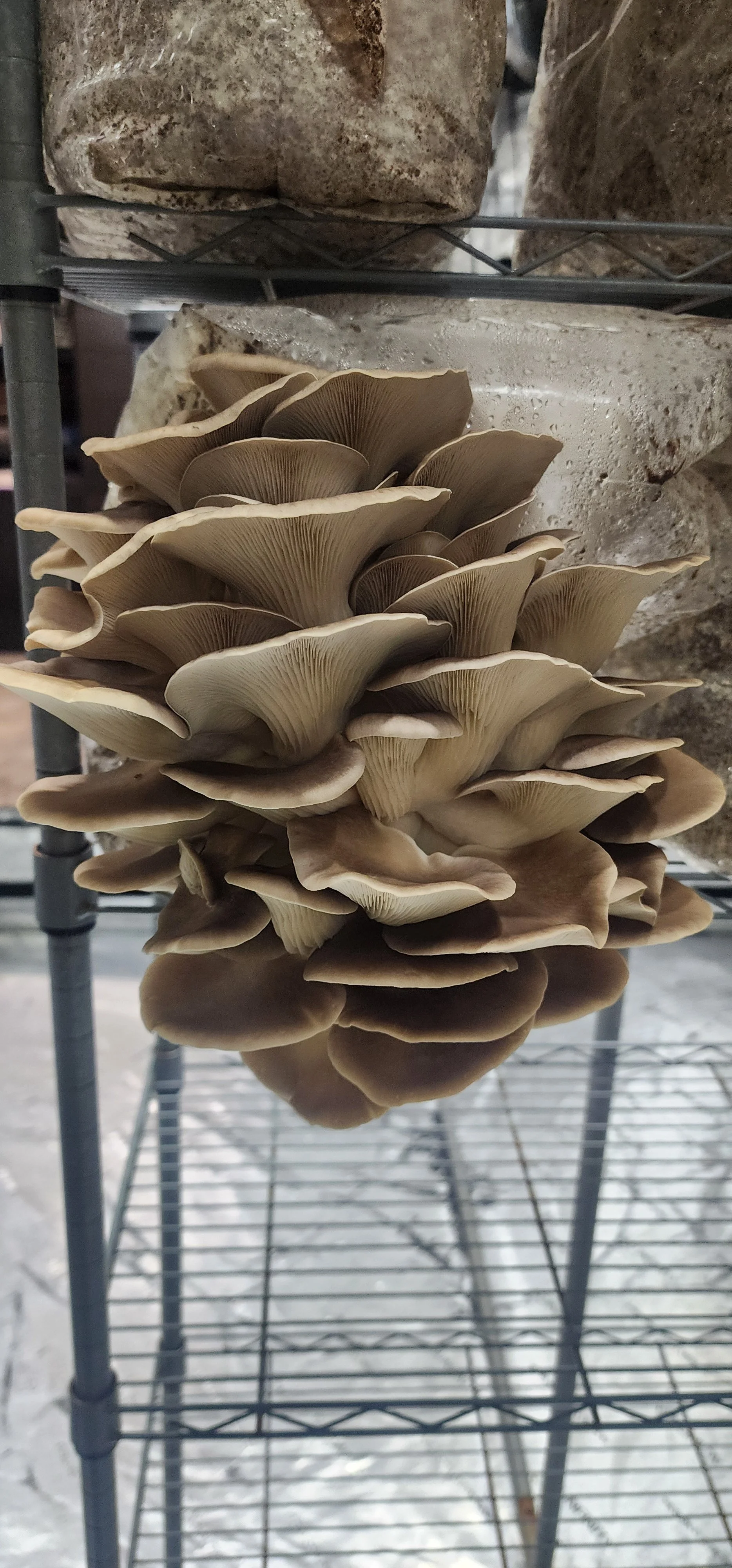 Image 5 of 7
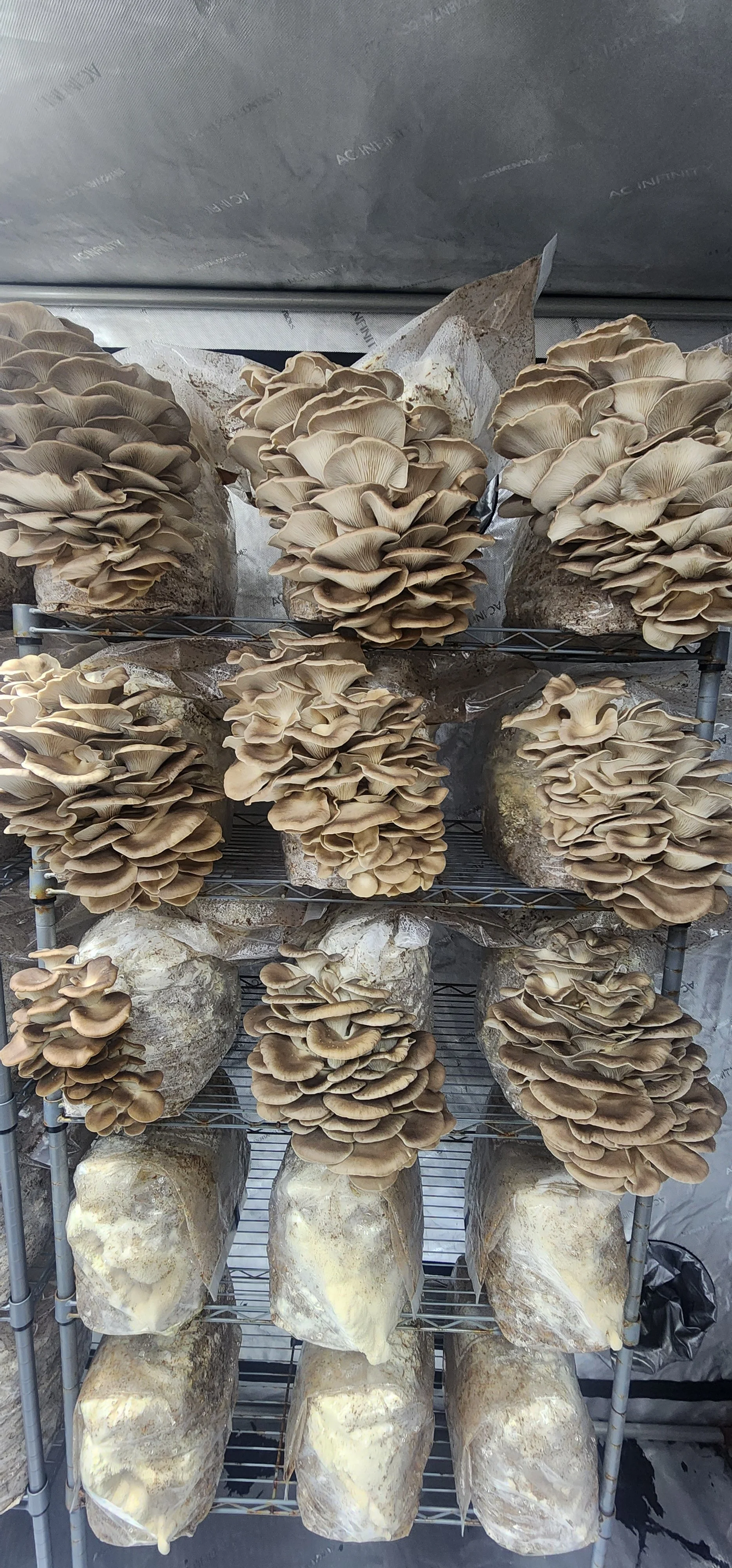 Image 6 of 7
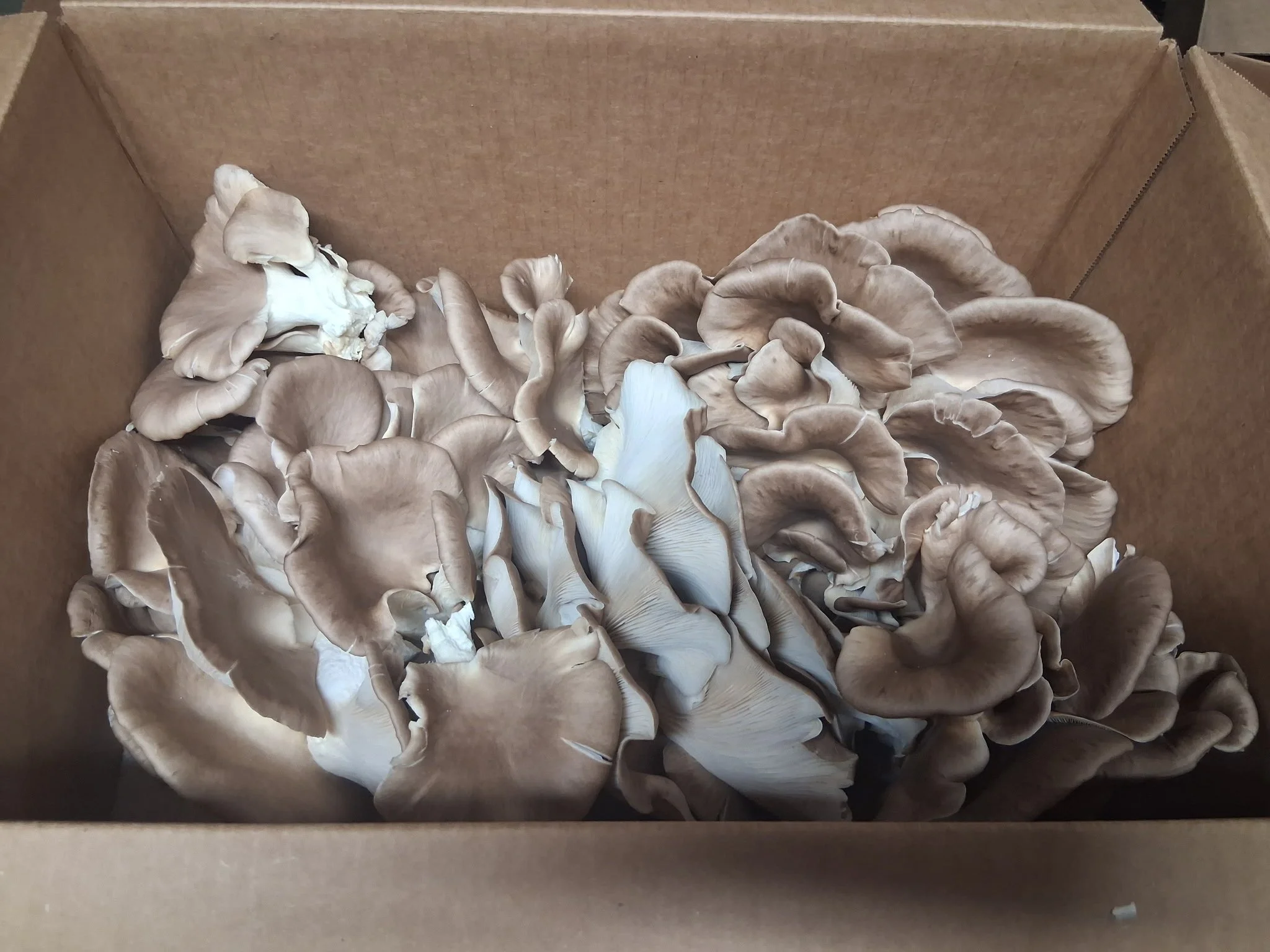 Image 7 of 7