 Image 1 of 5
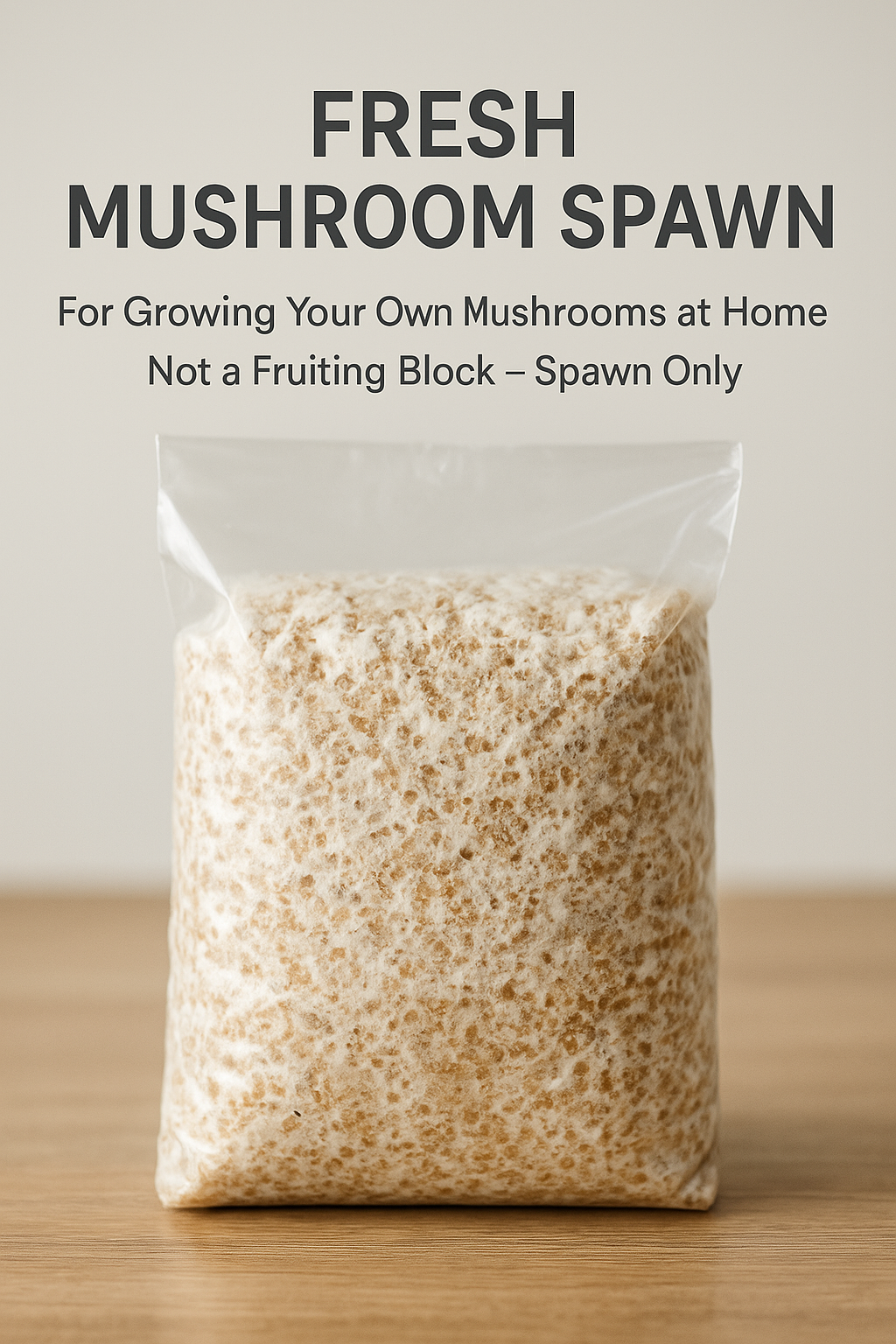 Image 2 of 5
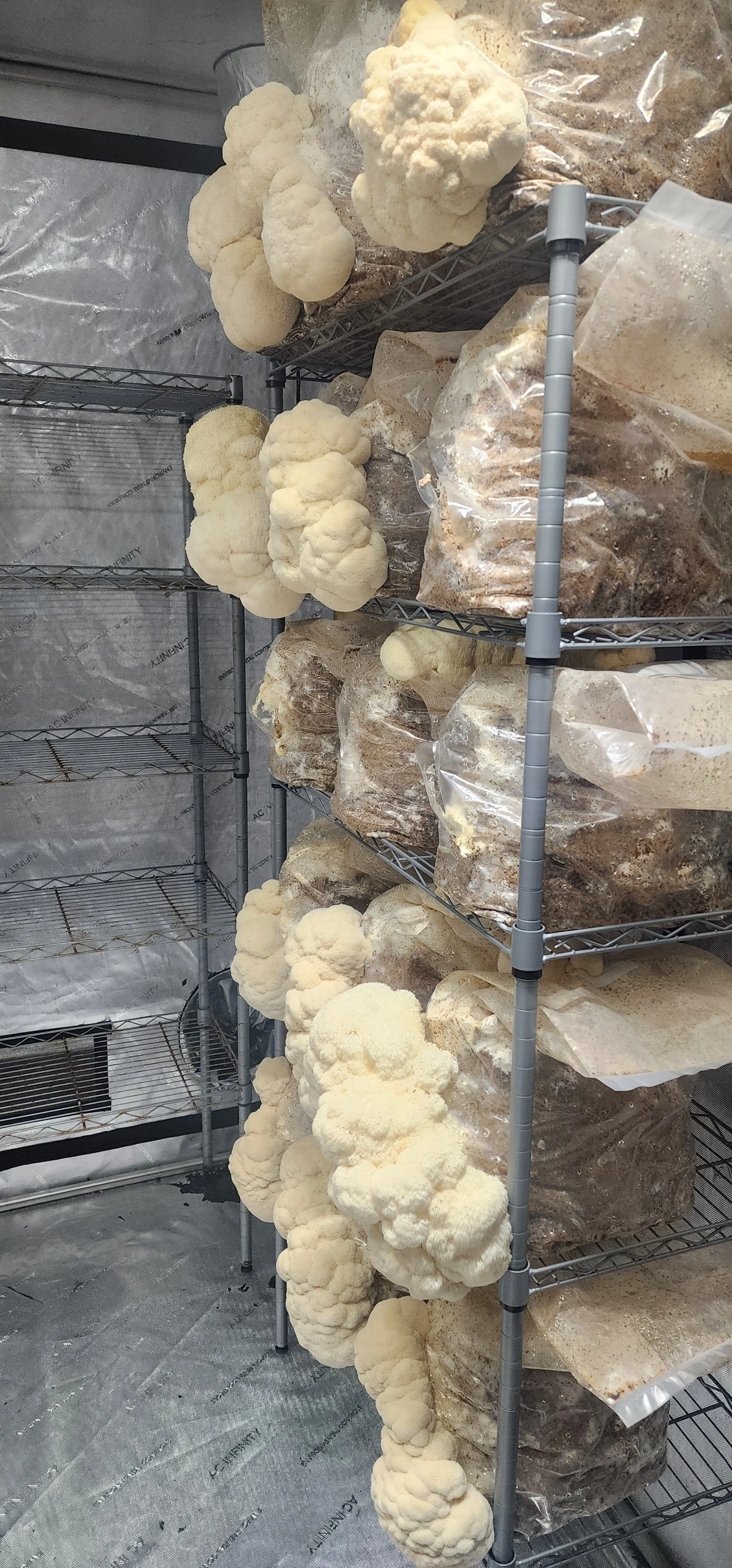 Image 3 of 5
 Image 4 of 5
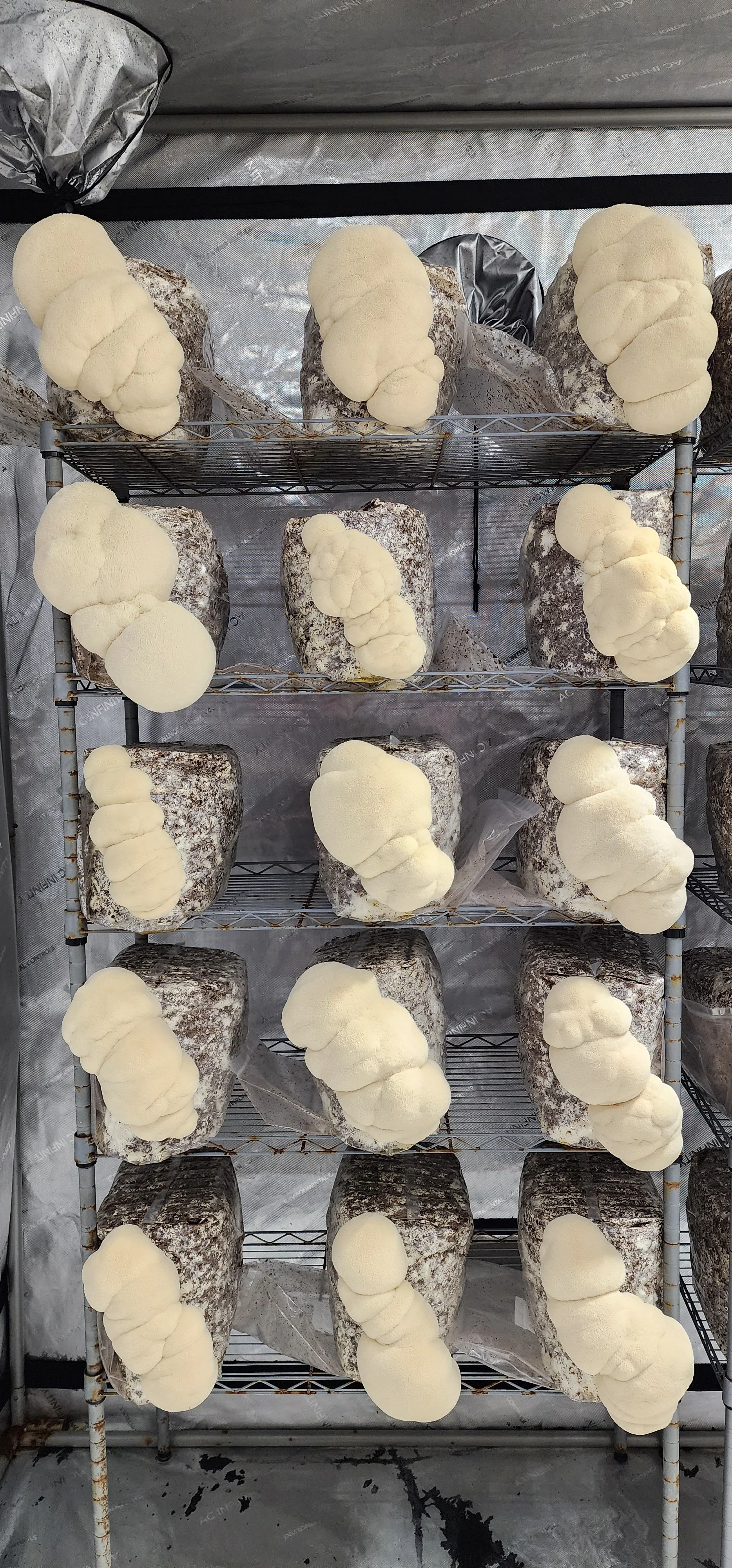 Image 5 of 5
Lion's Mane Mushroom Grain Spawn (HE-POW)
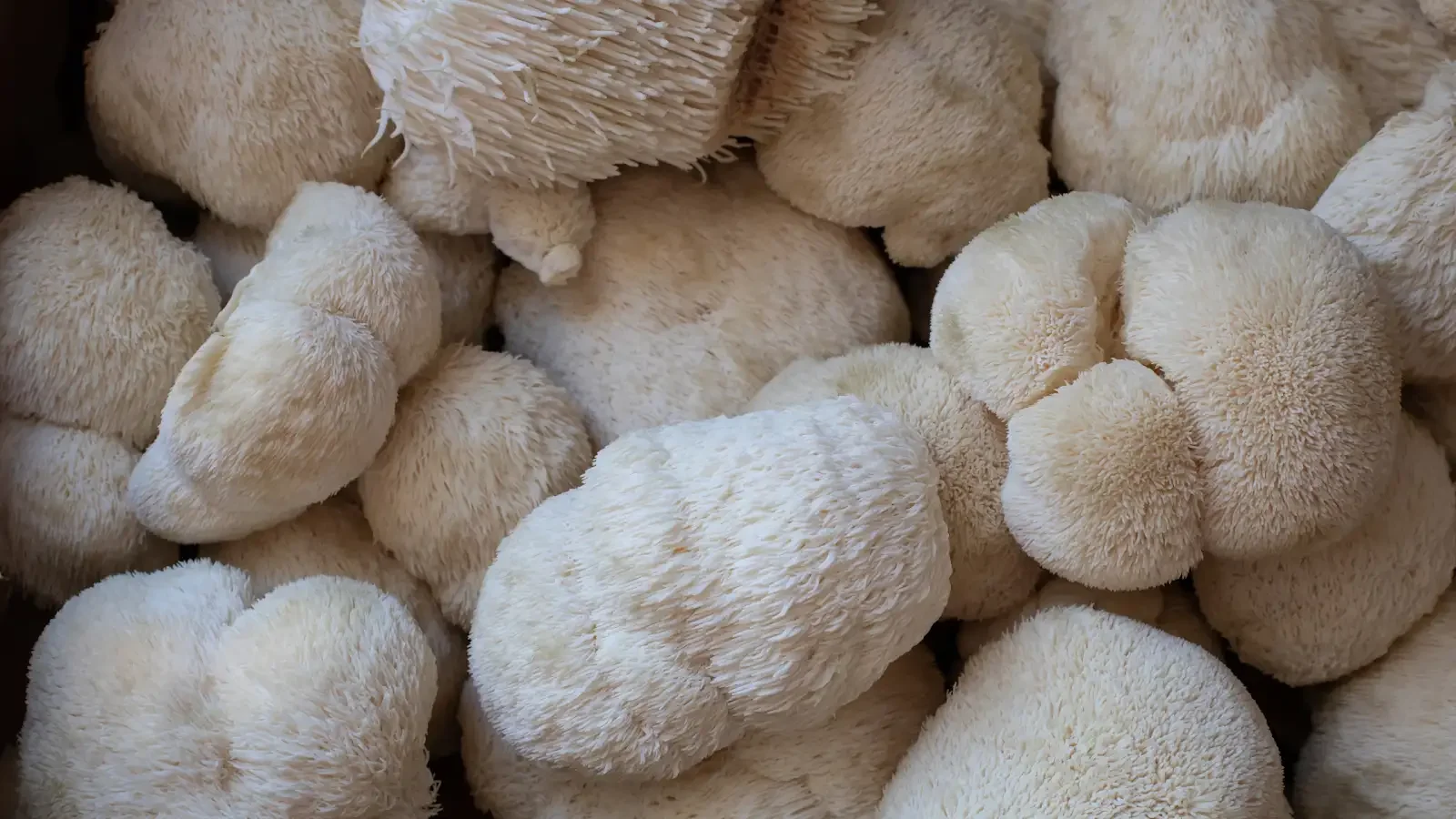
Commercial-grade Lion's Mane grain spawn — HE-POW from Maine Cap N' Stem, a heat-tolerant Hericium erinaceus strain bred for hot climates and warm-season production. Flashy, visually striking fruits with exposed spines. High-yielding and wholesale-ready.
What You're Getting
This is HE-POW, a commercial Hericium erinaceus strain sourced from Maine Cap N' Stem — trusted by hundreds of farms across North America. It's the strain Cap N' Stem specifically recommends for farms in hot climates or growing through warm seasons, where standard Lion's Mane strains struggle.
We grow HE-POW ourselves at Cotaco Creek Mushroom Farm. You're buying the same genetics we put in our own blocks.
The spawn ships as fully colonized grain, ready to transfer directly to your bulk substrate. Each bag is produced using proper aseptic technique and undergoes visual inspection before it ships.
Why HE-POW?
Lion's Mane is one of the most demanding species to cultivate — strain selection matters more here than with oysters. HE-POW earns its place in commercial grows because of a few key traits:
Heat-tolerant, warm-season performer — higher heat tolerance than most Lion's Mane strains; the preferred choice for farms in hot climates or running summer production
Flashy, high-visual-appeal fruits — known for exposed, cascading spines and striking visual presentation, while still meeting wholesale production standards
Flexible substrate compatibility — highest yields on Master's Mix (HWFP + soy hulls), but performs reliably on lower-supplementation recipes like 65–70% hardwood + 30–35% wheat middlings or soy hulls
Strong yield per block — 2.5 to 3+ lbs per 10 lb Master's Mix block, with potential for more across multiple flushes
Accepts both sterilization and ultrapasteurization — works with your existing substrate prep workflow
Functional mushroom with well-documented benefits — Lion's Mane is widely studied for its neuroprotective compounds (hericenones and erinacines), making it one of the most in-demand medicinal and culinary mushrooms on the market
Best Uses
Sterilized Master's Mix or hardwood fruiting blocks
Lower-supplementation hardwood blocks (65–70% HWFP + 30–35% wheat middlings/soy hulls)
Commercial production through warm seasons when other Lion's Mane strains underperform
Grain-to-grain (G2G) expansion for larger production runs
⚠️ Lion's Mane does not fruit well on straw or coffee grounds. Sterilized or ultrapasteurized hardwood-based substrate is required.
Growing Parameters
ParameterRange
Incubation Temp: 68–75°F (keep block core below low 70s)
Fruiting Temp: 55–80°F (HE-POW heat-tolerant vs. standard 55–65°F)
Humidity (fruiting): 85–95% RH
Time to First Pins: 14–21 days after bag is cut
Lion's Mane requires high fresh air exchange and abundant oxygen at the fruiting surface. Maintain high RH but avoid condensation pooling directly on developing fruits — this species is prone to both desiccation and bacterial rot. Top fruiting (cut at the top of the block) is the most common initiation technique.
A Note on Moisture Content
Lion's Mane is more moisture-sensitive than oyster species. 59–62% total moisture content is the target. Even slightly above 62% increases the risk of bacterial contamination and secondary metabolite pooling. Below 59%, expect poor colonization and mold. This is the most common failure point for new Lion's Mane growers — dial in your substrate hydration before anything else.
Storage & Handling
Use within 2–4 weeks of receipt for best results
Refrigerate at 35–45°F if not using immediately — viable up to 3 months when properly stored
Do not freeze
Allow spawn to reach room temperature before use
Break up grain mass thoroughly before inoculating substrate
Always use clean tools and aseptic technique when transferring — Lion's Mane is more susceptible to mold contamination than most oyster species
About Cotaco Creek Mushroom Farm
We're a small commercial mushroom farm in Somerville, Alabama. We grow, eat, and sell what we produce — and we only offer spawn from strains we trust in our own facility. Every bag leaves here because we'd put it in our own blocks.
Have questions about inoculation rates, substrate formulas, or fruiting conditions? Reach out — we're happy to help.
FAQ
Can I use this to make more grain spawn?
Yes. Grain-to-grain (G2G) transfers work well if you have a flow hood or still air box. Note that Lion's Mane mycelium is more prone to contamination than oyster species — strict aseptic technique is especially important here.
What's the inoculation rate?
For sterilized or ultrapasteurized hardwood blocks, 10–20% spawn by weight is standard. Higher rates help reduce contamination risk given Lion's Mane's sensitivity.
Do I need a pressure cooker or autoclave?
Yes. Lion's Mane requires sterilized (pressure cook at 15 PSI, 2.5 hrs) or ultrapasteurized hardwood substrate. It does not perform on pasteurized straw.
How is HE-POW different from standard Lion's Mane strains?
HE-POW is specifically selected for higher heat tolerance — most Lion's Mane strains stall or produce poor-quality fruits above 65°F. HE-POW extends that workable range, making it a better fit for summer production in climates like Alabama's. It also produces flashier fruits with more exposed spines compared to the dense, club-like clusters of typical commercial strains.
What does Lion's Mane taste like?
Mild, slightly sweet, with a meaty, lobster-like texture when cooked. It's one of the most popular culinary mushrooms for meat substitution and one of the fastest-growing segments in the functional mushroom market.
Will this work outdoors in Alabama?
Lion's Mane is not well-suited to uncontrolled outdoor production. It needs precise humidity and fresh air exchange, and is highly sensitive to temperature swings. Indoor cultivation with climate control is strongly recommended for reliable results.
Commercial-grade Lion's Mane grain spawn — HE-POW from Maine Cap N' Stem, a heat-tolerant Hericium erinaceus strain bred for hot climates and warm-season production. Flashy, visually striking fruits with exposed spines. High-yielding and wholesale-ready.
What You're Getting
This is HE-POW, a commercial Hericium erinaceus strain sourced from Maine Cap N' Stem — trusted by hundreds of farms across North America. It's the strain Cap N' Stem specifically recommends for farms in hot climates or growing through warm seasons, where standard Lion's Mane strains struggle.
We grow HE-POW ourselves at Cotaco Creek Mushroom Farm. You're buying the same genetics we put in our own blocks.
The spawn ships as fully colonized grain, ready to transfer directly to your bulk substrate. Each bag is produced using proper aseptic technique and undergoes visual inspection before it ships.
Why HE-POW?
Lion's Mane is one of the most demanding species to cultivate — strain selection matters more here than with oysters. HE-POW earns its place in commercial grows because of a few key traits:
Heat-tolerant, warm-season performer — higher heat tolerance than most Lion's Mane strains; the preferred choice for farms in hot climates or running summer production
Flashy, high-visual-appeal fruits — known for exposed, cascading spines and striking visual presentation, while still meeting wholesale production standards
Flexible substrate compatibility — highest yields on Master's Mix (HWFP + soy hulls), but performs reliably on lower-supplementation recipes like 65–70% hardwood + 30–35% wheat middlings or soy hulls
Strong yield per block — 2.5 to 3+ lbs per 10 lb Master's Mix block, with potential for more across multiple flushes
Accepts both sterilization and ultrapasteurization — works with your existing substrate prep workflow
Functional mushroom with well-documented benefits — Lion's Mane is widely studied for its neuroprotective compounds (hericenones and erinacines), making it one of the most in-demand medicinal and culinary mushrooms on the market
Best Uses
Sterilized Master's Mix or hardwood fruiting blocks
Lower-supplementation hardwood blocks (65–70% HWFP + 30–35% wheat middlings/soy hulls)
Commercial production through warm seasons when other Lion's Mane strains underperform
Grain-to-grain (G2G) expansion for larger production runs
⚠️ Lion's Mane does not fruit well on straw or coffee grounds. Sterilized or ultrapasteurized hardwood-based substrate is required.
Growing Parameters
ParameterRange
Incubation Temp: 68–75°F (keep block core below low 70s)
Fruiting Temp: 55–80°F (HE-POW heat-tolerant vs. standard 55–65°F)
Humidity (fruiting): 85–95% RH
Time to First Pins: 14–21 days after bag is cut
Lion's Mane requires high fresh air exchange and abundant oxygen at the fruiting surface. Maintain high RH but avoid condensation pooling directly on developing fruits — this species is prone to both desiccation and bacterial rot. Top fruiting (cut at the top of the block) is the most common initiation technique.
A Note on Moisture Content
Lion's Mane is more moisture-sensitive than oyster species. 59–62% total moisture content is the target. Even slightly above 62% increases the risk of bacterial contamination and secondary metabolite pooling. Below 59%, expect poor colonization and mold. This is the most common failure point for new Lion's Mane growers — dial in your substrate hydration before anything else.
Storage & Handling
Use within 2–4 weeks of receipt for best results
Refrigerate at 35–45°F if not using immediately — viable up to 3 months when properly stored
Do not freeze
Allow spawn to reach room temperature before use
Break up grain mass thoroughly before inoculating substrate
Always use clean tools and aseptic technique when transferring — Lion's Mane is more susceptible to mold contamination than most oyster species
About Cotaco Creek Mushroom Farm
We're a small commercial mushroom farm in Somerville, Alabama. We grow, eat, and sell what we produce — and we only offer spawn from strains we trust in our own facility. Every bag leaves here because we'd put it in our own blocks.
Have questions about inoculation rates, substrate formulas, or fruiting conditions? Reach out — we're happy to help.
FAQ
Can I use this to make more grain spawn?
Yes. Grain-to-grain (G2G) transfers work well if you have a flow hood or still air box. Note that Lion's Mane mycelium is more prone to contamination than oyster species — strict aseptic technique is especially important here.
What's the inoculation rate?
For sterilized or ultrapasteurized hardwood blocks, 10–20% spawn by weight is standard. Higher rates help reduce contamination risk given Lion's Mane's sensitivity.
Do I need a pressure cooker or autoclave?
Yes. Lion's Mane requires sterilized (pressure cook at 15 PSI, 2.5 hrs) or ultrapasteurized hardwood substrate. It does not perform on pasteurized straw.
How is HE-POW different from standard Lion's Mane strains?
HE-POW is specifically selected for higher heat tolerance — most Lion's Mane strains stall or produce poor-quality fruits above 65°F. HE-POW extends that workable range, making it a better fit for summer production in climates like Alabama's. It also produces flashier fruits with more exposed spines compared to the dense, club-like clusters of typical commercial strains.
What does Lion's Mane taste like?
Mild, slightly sweet, with a meaty, lobster-like texture when cooked. It's one of the most popular culinary mushrooms for meat substitution and one of the fastest-growing segments in the functional mushroom market.
Will this work outdoors in Alabama?
Lion's Mane is not well-suited to uncontrolled outdoor production. It needs precise humidity and fresh air exchange, and is highly sensitive to temperature swings. Indoor cultivation with climate control is strongly recommended for reliable results.