 Image 1 of 1
Lion's Mane Mushroom Grain Spawn - Standard Commercial Strain
Lion’s Mane Grain Spawn
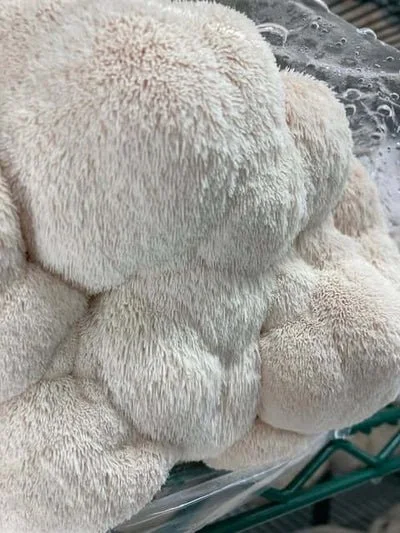
Lion’s mane produces dense, white, shaggy fruiting bodies with a tender texture that chefs and market customers look for. Best suited to sterilized, supplemented hardwood sawdust and Master’s Mix.
What You’re Getting
This strain produces dense fruit that hold up well in clamshells and on the market table.
Your order contains fully colonized grain spawn, ready to mix into a properly prepared bulk substrate. We grow this strain at Cotaco Creek Mushroom Farm in Somerville, Alabama, and offer it because it has earned a place in our own production lineup.
Why this strain?
Proven in our own grow room and with our customers.
Market-ready fruit. Lion’s mane sells well fresh and dries well for powders and other value-added products.
Clean, white heads. Well-managed blocks produce bright white fruit with minimal yellowing when humidity and fresh air are in balance.
Built for supplemented sawdust. Lion’s mane performs best on sterilized hardwood-based substrates, including Master’s Mix.
Best Uses
Sterilized supplemented hardwood sawdust or Master’s Mix fruiting blocks.
Grain-to-grain expansion in a clean workspace.
Indoor production in a controlled fruiting space.
Growing Parameters
These are starting targets, not a promise of identical results in every room. Adjust based on your substrate, block size, airflow, and what the mushrooms are showing you.
Parameter Range:
Incubation temperature: 70–75°F; leave space between blocks so they do not overheat.
Fruiting temperature: About 50–65°F
Fruiting humidity: About 85–95% RH. Lion’s mane dries out quickly, so keep humidity high and avoid spraying water directly onto the fruit.
Fresh air: Plenty of air exchange. High CO₂ can produce elongated, coral-like or stunted growth.
Light: Indirect ambient light or a regular daily light cycle.
Substrates: Sterilized supplemented hardwood sawdust or Master’s Mix.
Storage & Handling
Use living spawn as soon as practical after delivery. If you cannot use it right away, keep the bag sealed and refrigerated, do not freeze it, and let it come toward room temperature before breaking it up and inoculating your substrate. Inspect the bag on arrival and contact us before using it if you see unusual colors, a damaged seal, or excess liquid.
About Cotaco Creek Mushroom Farm
We’re a small commercial mushroom farm in Somerville, Alabama. We grow the strains we offer and understand what matters when spawn is headed into a real production run: healthy colonization, careful handling, and practical guidance when you need it.
FAQ
Can I use this to make more grain spawn?
Yes. Grain-to-grain transfers are possible if you have sterile grain and a clean transfer setup, such as a flow hood or properly used still-air box. Each expansion adds contamination risk.
What inoculation rate should I use?
Start around 10–15% grain spawn by wet substrate weight for supplemented hardwood blocks, then adjust to your process. For example, a 10 lb prepared block at 10% receives about 1 lb of spawn.
Do I need a pressure cooker or autoclave?
Yes. Supplemented hardwood substrates such as Master’s Mix need a validated sterilization process. Let the substrate cool to inoculation temperature before adding spawn.
Can I grow lion’s mane on straw?
Straw is not a good fit for lion’s mane. Use sterilized, supplemented hardwood sawdust for reliable results.
Can I use this grain spawn on logs?
Grain spawn isn’t recommended for log inoculation. Plug or sawdust spawn is the better choice for logs.
Is this a grow kit?
No. Grain spawn is the inoculant. You still need to prepare a bulk substrate, let it colonize, and provide fruiting conditions.
Why is my lion’s mane turning yellow or brown?
Yellowing usually means the fruit is drying out, is past its peak, or is getting water sprayed directly on it. Raise humidity, keep water off the fruit, and harvest while the spines are still short and the heads are firm and white.
Will lion’s mane grow well in an Alabama summer?
It prefers cooler fruiting conditions. In Alabama, it fits naturally into fall, winter, and spring production, or into a climate-controlled fruiting room in summer.