 Image 1 of 5
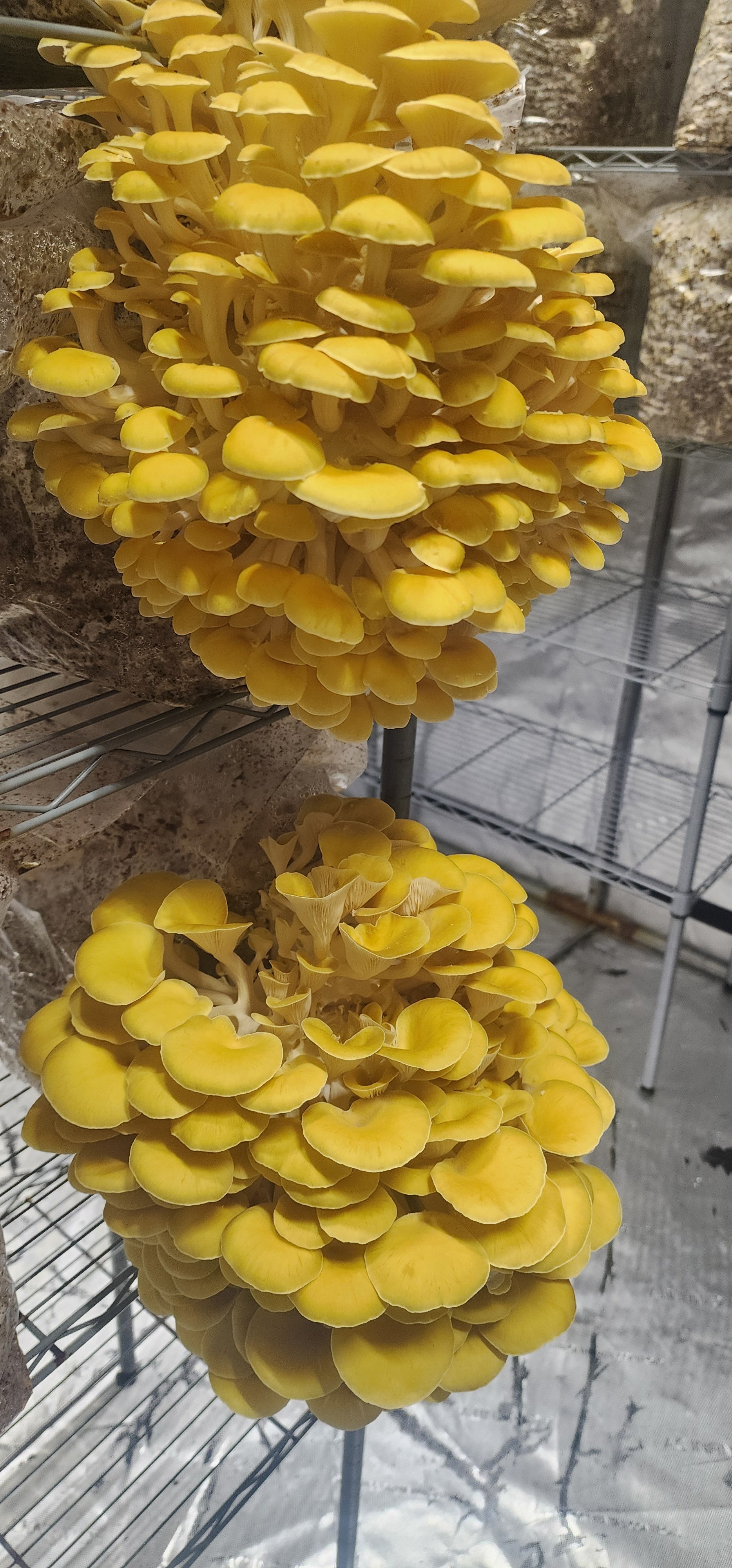 Image 2 of 5
 Image 3 of 5
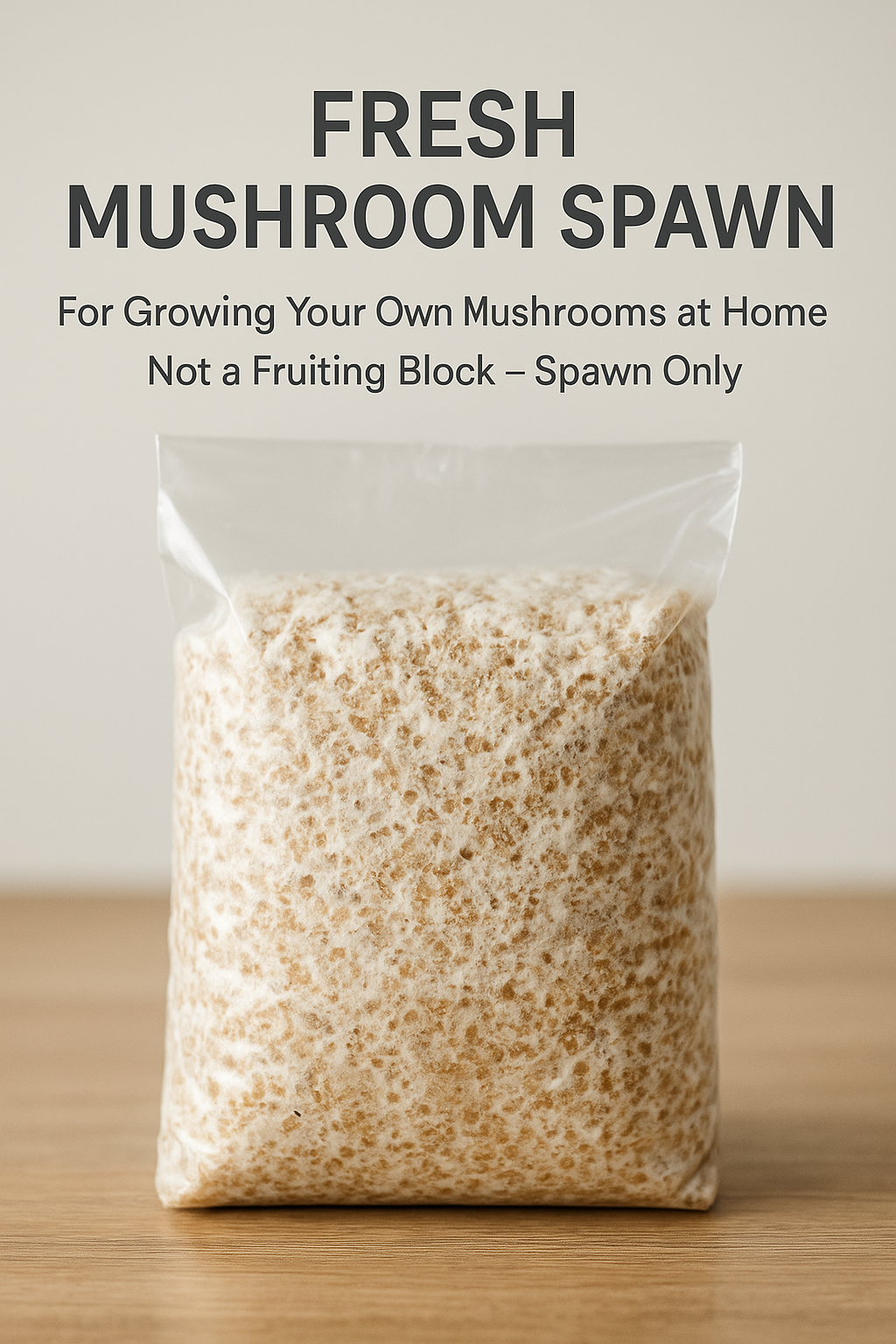 Image 4 of 5
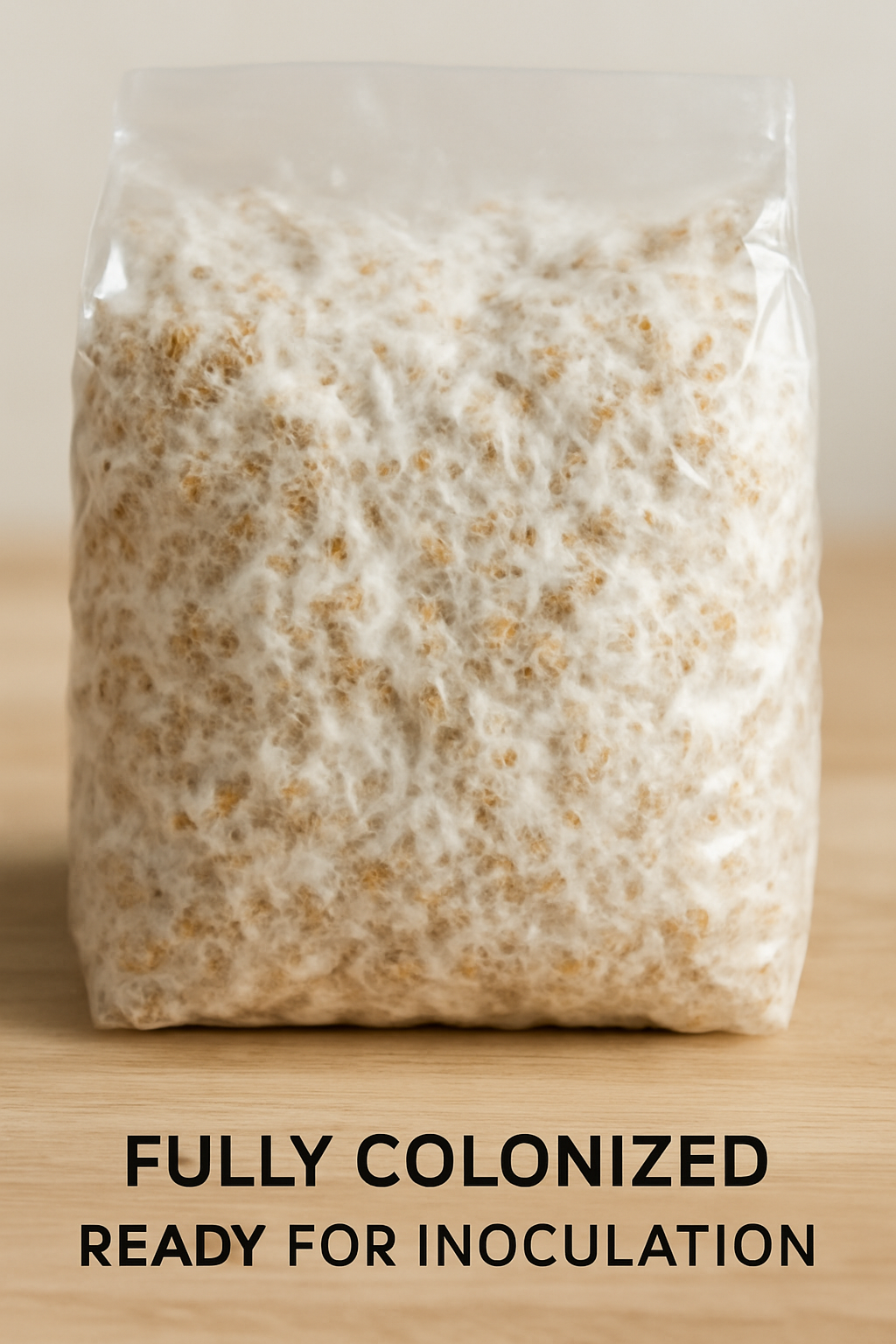 Image 5 of 5
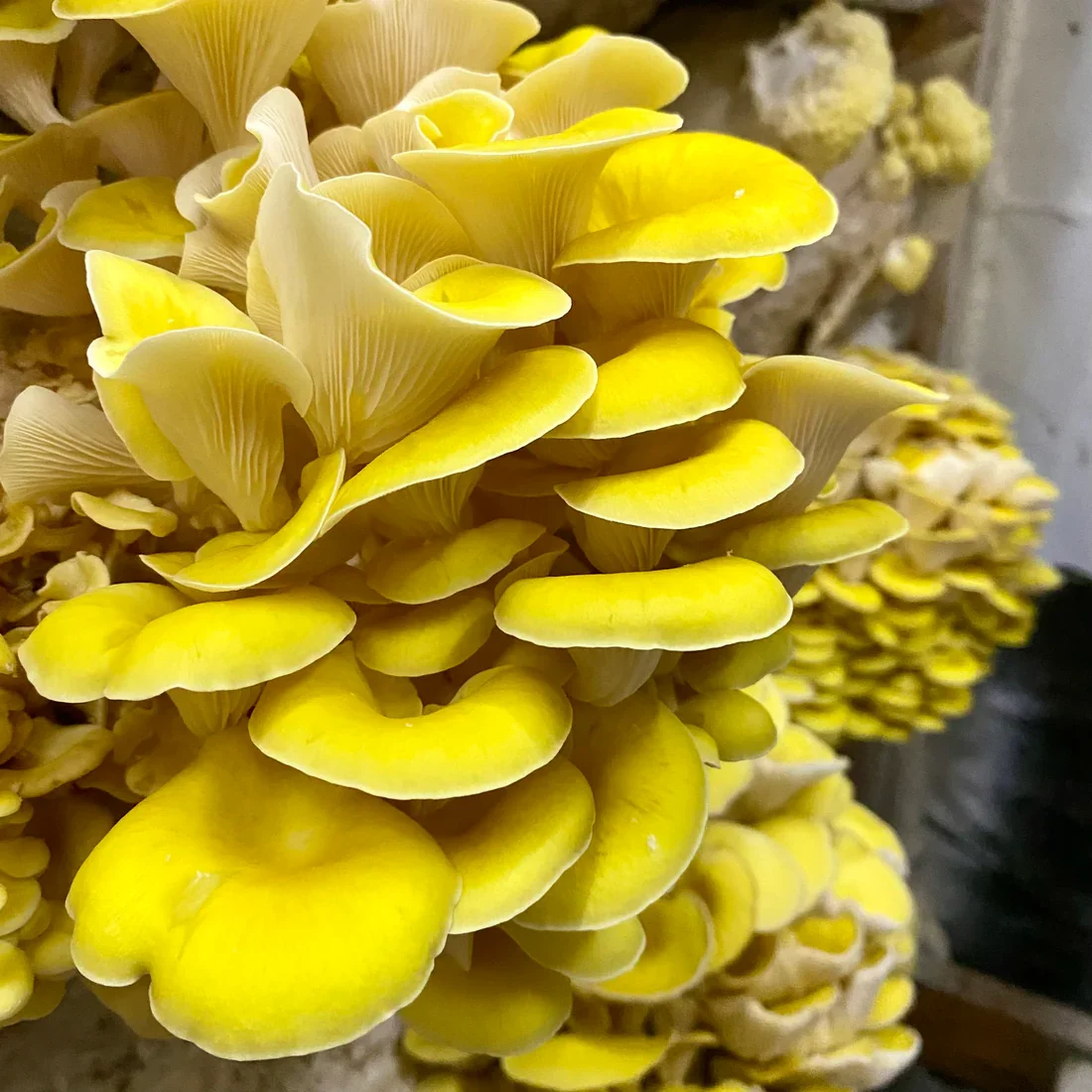
Commercial-grade Golden Oyster grain spawn — CNS Gold from Maine Cap N' Stem, a Pleurotus citrinopileatus strain selected for vivid color, heavy clustering, and warm-season production. One of the most visually striking mushrooms you can grow. Fast colonizer. Thrives in summer heat.
This is CNS Gold, a commercial Pleurotus citrinopileatus strain sourced from Maine Cap N' Stem. Golden Oyster is native to eastern Russia, northern China, and Japan, where it grows in large clusters on hardwood in summer and fall — and CNS Gold captures that wild visual character in a farm-production format.
We grow CNS Gold ourselves at Cotaco Creek Mushroom Farm. You're buying the same genetics we put in our own blocks.
The spawn ships as fully colonized grain, ready to transfer directly to your bulk substrate. Each bag is produced using proper aseptic technique and undergoes visual inspection before it ships.
Golden Oyster is unlike any other oyster species on the market — in appearance, flavor, and growing behavior. CNS Gold earns its place in commercial grows because of a few key traits:
Showstopping visual appeal — brilliant bright yellow to golden caps (¾–4 inches), tight velvety clusters with white stems; the most visually distinctive oyster you can sell at market or wholesale
Warm-season performer — thrives at temperatures that would stress Blue Oyster; ideal for summer production gaps
High-light, high-color strain — CNS Gold is noted for preferring intense lighting, which drives deeper, more vivid yellow coloration; the more light, the better the visual presentation
Fast colonizer — dense mycelial growth on grain; colonizes bulk substrate quickly
Broad substrate compatibility — performs on pasteurized straw, hardwood sawdust, Master's Mix, cottonseed hulls, and coffee grounds
Functional antioxidant profile — P. citrinopileatus ranks among the highest of all cultivated mushrooms in ergothioneine, a potent cellular antioxidant
A few things buyers should know before growing this species:
Extremely fragile post-harvest — caps bruise and degrade within hours of harvest; Golden Oyster is best sold direct-to-consumer or at farmers market, not through long distribution chains
Heavy spore producer — clusters release large volumes of yellow spores at maturity; harvest before caps flatten and margins turn upward to avoid spore dumps in your grow space
Lighter yields than Blue or Phoenix — P. citrinopileatus converts substrate to mushroom mass at a lower rate than other oyster species; expect lighter first-flush yields but exceptional visual and market value per pound
Inoculating pasteurized straw bags, buckets, or columns
Sterilized hardwood or Master's Mix fruiting blocks
Outdoor straw beds (late spring through early fall — thrives in Alabama summer heat)
Grain-to-grain (G2G) expansion for larger production runs
Farmers market and direct-to-consumer sales where visual impact drives purchase decisions
ParameterRange
Incubation Temp: 75–85°F
Fruiting Temp: 65–85°F (optimal 70–80°F)
Humidity (pinning): 90–95% RH
Humidity (fruiting): 85–90% RH
Light: High intensity preferred — drives vivid yellow color
Time to First Pins: 12–20 days from inoculation
Harvest clusters when caps are fully open but before margins begin curling upward — this is the peak flavor and visual window. Golden Oyster goes from prime to past-peak faster than most other oyster species.
Use within 2–4 weeks of receipt for best results
Refrigerate at 35–45°F if not using immediately — viable up to 3 months when properly stored
Do not freeze
Allow spawn to reach room temperature before use
Break up grain mass thoroughly before inoculating substrate
Always use clean tools and aseptic technique when transferring
We're a small commercial mushroom farm in Somerville, Alabama. We grow, eat, and sell what we produce — and we only offer spawn from strains we trust in our own facility. Every bag leaves here because we'd put it in our own blocks.
Have questions about inoculation rates, substrate formulas, or fruiting conditions? Reach out — we're happy to help.
Can I use this to make more grain spawn?
Yes. Grain-to-grain (G2G) transfers work well with this strain if you have a flow hood or still air box and proper aseptic technique.
What's the inoculation rate?
For sterilized or pasteurized substrate, 10–20% spawn by weight is standard. Higher rates help speed colonization.
Do I need a pressure cooker or autoclave?
Not necessarily — Golden Oyster fruits well on pasteurized straw, which only requires a hot water bath (160–185°F for 1–2 hrs) or lime pasteurization. For Master's Mix or supplemented hardwood blocks, sterilization at 15 PSI is recommended.
Why are the yields lower than Blue Oyster?
Pleurotus citrinopileatus converts substrate mass to mushroom mass at a lower biological efficiency than Blue or Phoenix Oyster. You'll get lighter harvests per block, but the visual appeal and market price per pound typically more than compensate — Golden Oyster commands a strong premium at farmers markets.
Will this work outdoors in Alabama?
Yes — Golden Oyster is one of the best outdoor summer species for the Southeast. It thrives in the heat that shuts Blue Oyster down. Straw beds and wood chip piles in a shaded, humid spot work well from late spring through early fall.
Commercial-grade Golden Oyster grain spawn — CNS Gold from Maine Cap N' Stem, a Pleurotus citrinopileatus strain selected for vivid color, heavy clustering, and warm-season production. One of the most visually striking mushrooms you can grow. Fast colonizer. Thrives in summer heat.
This is CNS Gold, a commercial Pleurotus citrinopileatus strain sourced from Maine Cap N' Stem. Golden Oyster is native to eastern Russia, northern China, and Japan, where it grows in large clusters on hardwood in summer and fall — and CNS Gold captures that wild visual character in a farm-production format.
We grow CNS Gold ourselves at Cotaco Creek Mushroom Farm. You're buying the same genetics we put in our own blocks.
The spawn ships as fully colonized grain, ready to transfer directly to your bulk substrate. Each bag is produced using proper aseptic technique and undergoes visual inspection before it ships.
Golden Oyster is unlike any other oyster species on the market — in appearance, flavor, and growing behavior. CNS Gold earns its place in commercial grows because of a few key traits:
Showstopping visual appeal — brilliant bright yellow to golden caps (¾–4 inches), tight velvety clusters with white stems; the most visually distinctive oyster you can sell at market or wholesale
Warm-season performer — thrives at temperatures that would stress Blue Oyster; ideal for summer production gaps
High-light, high-color strain — CNS Gold is noted for preferring intense lighting, which drives deeper, more vivid yellow coloration; the more light, the better the visual presentation
Fast colonizer — dense mycelial growth on grain; colonizes bulk substrate quickly
Broad substrate compatibility — performs on pasteurized straw, hardwood sawdust, Master's Mix, cottonseed hulls, and coffee grounds
Functional antioxidant profile — P. citrinopileatus ranks among the highest of all cultivated mushrooms in ergothioneine, a potent cellular antioxidant
A few things buyers should know before growing this species:
Extremely fragile post-harvest — caps bruise and degrade within hours of harvest; Golden Oyster is best sold direct-to-consumer or at farmers market, not through long distribution chains
Heavy spore producer — clusters release large volumes of yellow spores at maturity; harvest before caps flatten and margins turn upward to avoid spore dumps in your grow space
Lighter yields than Blue or Phoenix — P. citrinopileatus converts substrate to mushroom mass at a lower rate than other oyster species; expect lighter first-flush yields but exceptional visual and market value per pound
Inoculating pasteurized straw bags, buckets, or columns
Sterilized hardwood or Master's Mix fruiting blocks
Outdoor straw beds (late spring through early fall — thrives in Alabama summer heat)
Grain-to-grain (G2G) expansion for larger production runs
Farmers market and direct-to-consumer sales where visual impact drives purchase decisions
ParameterRange
Incubation Temp: 75–85°F
Fruiting Temp: 65–85°F (optimal 70–80°F)
Humidity (pinning): 90–95% RH
Humidity (fruiting): 85–90% RH
Light: High intensity preferred — drives vivid yellow color
Time to First Pins: 12–20 days from inoculation
Harvest clusters when caps are fully open but before margins begin curling upward — this is the peak flavor and visual window. Golden Oyster goes from prime to past-peak faster than most other oyster species.
Use within 2–4 weeks of receipt for best results
Refrigerate at 35–45°F if not using immediately — viable up to 3 months when properly stored
Do not freeze
Allow spawn to reach room temperature before use
Break up grain mass thoroughly before inoculating substrate
Always use clean tools and aseptic technique when transferring
We're a small commercial mushroom farm in Somerville, Alabama. We grow, eat, and sell what we produce — and we only offer spawn from strains we trust in our own facility. Every bag leaves here because we'd put it in our own blocks.
Have questions about inoculation rates, substrate formulas, or fruiting conditions? Reach out — we're happy to help.
Can I use this to make more grain spawn?
Yes. Grain-to-grain (G2G) transfers work well with this strain if you have a flow hood or still air box and proper aseptic technique.
What's the inoculation rate?
For sterilized or pasteurized substrate, 10–20% spawn by weight is standard. Higher rates help speed colonization.
Do I need a pressure cooker or autoclave?
Not necessarily — Golden Oyster fruits well on pasteurized straw, which only requires a hot water bath (160–185°F for 1–2 hrs) or lime pasteurization. For Master's Mix or supplemented hardwood blocks, sterilization at 15 PSI is recommended.
Why are the yields lower than Blue Oyster?
Pleurotus citrinopileatus converts substrate mass to mushroom mass at a lower biological efficiency than Blue or Phoenix Oyster. You'll get lighter harvests per block, but the visual appeal and market price per pound typically more than compensate — Golden Oyster commands a strong premium at farmers markets.
Will this work outdoors in Alabama?
Yes — Golden Oyster is one of the best outdoor summer species for the Southeast. It thrives in the heat that shuts Blue Oyster down. Straw beds and wood chip piles in a shaded, humid spot work well from late spring through early fall.